

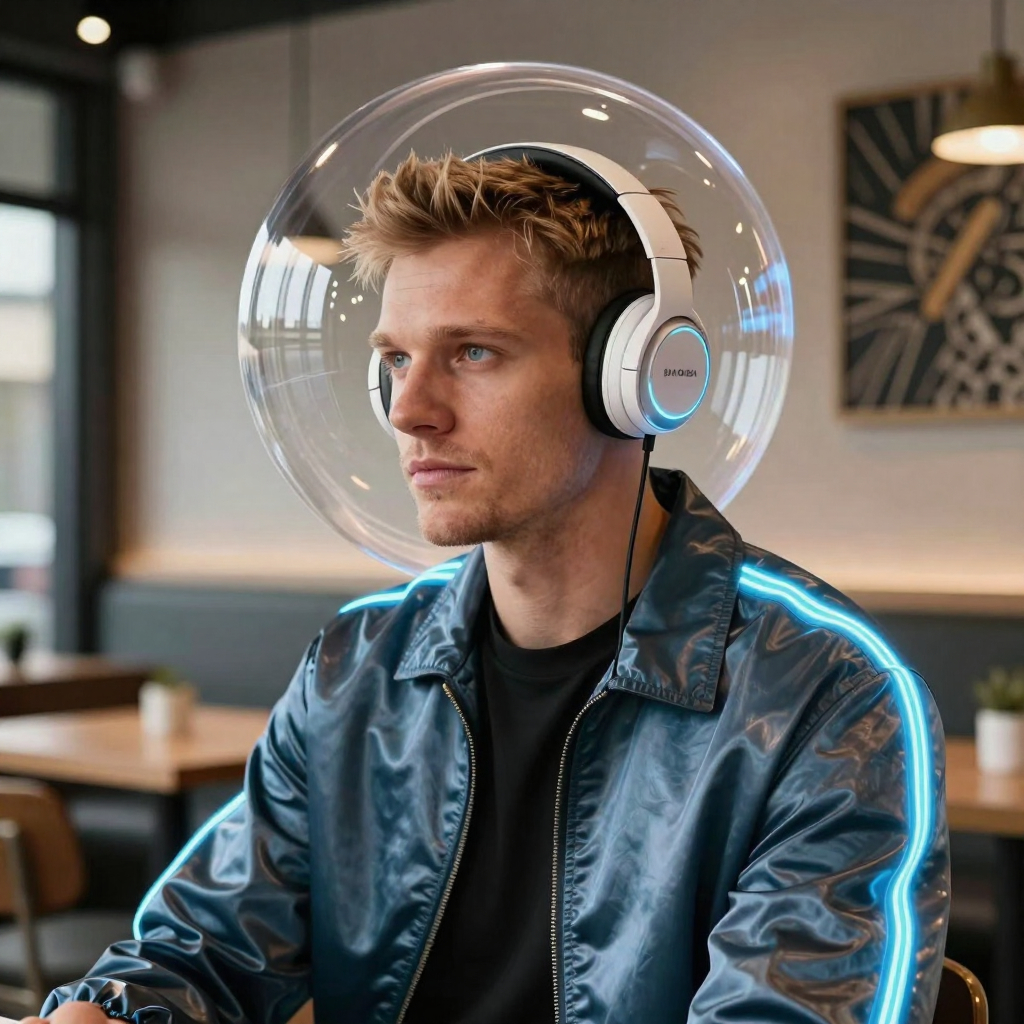
The Future of Noise Canceling: How Smart Tech Is Redefining Silence
The future of noise canceling is racing ahead with breakthroughs that will turn everyday soundscapes into personalized quiet zones. Imagine smart headphones that blend active noise cancelling with AI‑driven adaptive audio, instantly adjusting to your environment while preserving the richness of music. Picture compact sound bubbles that generate a private acoustic sphere around your voice, letting you hold conversations in bustling cafés without missing a beat. Envision acoustic fabrics woven into clothing or upholstery, silently absorbing unwanted frequencies and delivering built‑in hearing protection. Together, these innovations promise a world where silence is no longer a luxury but an intelligent, on‑demand experience for anyone, anywhere. Powered by on‑device deep learning and low‑latency mic arrays, these solutions will adapt in real time, offering crystal‑clear calls even in the loudest subway stations. As manufacturers roll out these features, consumers can expect their earbuds and apparel to become smarter, greener, and more attuned to personal well‑being.
The future of noise canceling: Smart Headphones
AI‑driven audio is reshaping how we experience sound on the go. Thanks to on‑device deep‑learning, headphones can analyze ambient noise in real time and adjust their filters without sending data to the cloud. Multi‑mic arrays—often six microphones packed into a single earcup—capture sound from every direction, enabling precise separation of speech from background chatter. This hardware foundation fuels adaptive ANC that not only blocks unwanted noise but also boosts desired voices, creating a seamless blend of silence and clarity.
Apple’s third‑generation AirPods Pro illustrate this shift. The earbuds bundle Transparency Mode, Conversation Boost, and Adaptive Audio alongside industry‑leading ANC, all powered by an on‑chip neural engine. Meanwhile, Hearvana AI recently secured $6 million to commercialize its “semantic hearing” platform. Its prototype headphones employ six microphones and on‑device deep‑learning algorithms to deliver what the company calls “semantic audio,” dynamically filtering noise while preserving speech intelligibility.
“This is a trend across the industry,” says Miikka Tikander, head of audio at Bang & Olufsen. Sony and Bose are already experimenting with similar multi‑mic designs, promising even richer adaptive ANC experiences. As these smart headphones mature, consumers can expect transparency mode that feels natural, adaptive audio that learns personal preferences, and conversation boost that makes every call crystal clear—even in the noisiest cafés.
| Product | ANC Tech | Transparency Mode | AI Features | Notable Fact |
|---|---|---|---|---|
| Apple AirPods Pro/Max | Adaptive feed‑forward & feedback | Yes – Conversation Boost, Live Listen | Spatial audio, Dynamic head tracking | First mainstream earbuds with integrated hearing protection |
| Sony WH‑1000XM | Dual‑phase hybrid ANC | Yes – Ambient Sound Control | Speak‑to‑Chat AI | Market leader in battery life (30 h) |
| Bose QuietComfort | Acoustic sensor ANC | Yes – Aware Mode | Noise‑cancelling auto‑adjust | Consistent comfort for long wear |
| Hearvana AI | Six‑mic semantic ANC | Yes – AI‑enhanced transparency | On‑device deep‑learning, Voice isolation | Raised $6 M for “semantic hearing” hardware |
| Meta Audio Lab | Multi‑mic adaptive ANC | Yes – Research prototype | AI‑driven de‑noise, Real‑time sound bubble | $16.2 M investment in Cambridge audio lab |
Sound Bubbles and Acoustic Fabrics: Shaping the Future of Noise Canceling
Sound‑bubble technology creates a personal acoustic zone that follows the wearer’s voice with less than 20 ms lag, allowing crystal‑clear conversation even in bustling environments. By leveraging multi‑mic arrays and on‑device AI‑driven audio processing, the bubble isolates speech while suppressing surrounding noise, turning noisy cafés into quiet pods.
The latest acoustic‑fabric innovations push that concept into clothing and interiors. MIT researcher Grace Yang is engineering voltage‑responsive silk that vibrates to cancel sound, a bio‑inspired meta‑material that mimics moth‑wing scales. Meanwhile, Attacus Acoustics has launched acoustic wallpaper capable of absorbing up to 80 percent of targeted frequencies, aiming for 90 percent coverage in future versions.
Sustainable textiles are also entering the market. Hemp fibers, recycled polyester, and mineral wool are being woven into panels and upholstery that meet Quiet Mark certification, delivering comparable acoustic insulation while reducing environmental impact.
Meta’s commitment underscores the commercial momentum: the company poured $16.2 million into an audio research lab in Cambridge, UK, to accelerate AI‑driven audio and sound‑bubble prototypes. Industry leaders echo this optimism. “This is a trend across the industry,” says Miikka Tikander, head of audio at Bang & Olufsen.
- Voice isolation under 20 ms, enabling real‑time dialogue.
- Voltage‑responsive silk that vibrates on demand for sound suppression.
- Acoustic wallpaper absorbing up to 80 % of targeted frequencies.
- Hemp‑based panels and recycled textiles certified by Quiet Mark for sustainable acoustic insulation.

Conclusion
The next generation of noise‑cancelling experiences will be driven by three converging forces: powerful on‑device AI, next‑level acoustic materials, and the emerging sound‑bubble paradigm. AI algorithms can now analyse ambient sound in real time, predict intrusive frequencies, and generate counter‑waves with millisecond latency, making cancellation more precise than ever. At the same time, bio‑inspired fabrics such as voltage‑responsive silk or mineral‑wool composites absorb and redirect noise without adding bulk, turning headphones, clothing, and interior walls into active sound shields. Sound‑bubble technology adds a personal layer of isolation, creating a silent pocket around a listener while still allowing selective hearing of speech or music. Together, these innovations promise earbuds that adapt instantly to changing environments, smart glasses that mute background chatter, and homes that blend aesthetic design with acoustic comfort.
SSL Labs embodies this vision. With deep expertise in AI, a strict ethical framework, and a passion for audio innovation, we develop intelligent, privacy‑first solutions that reshape how sound is managed. Our commitment to sustainable, human‑centric technology ensures the future of noise cancellation is both effective and responsible.
Frequently Asked Questions (FAQs)
Q: What is active noise cancelling?
A: Active noise cancelling (ANC) uses microphones to capture ambient sound, then generates an inverse waveform to cancel it before it reaches your ears. This real‑time processing reduces low‑frequency noise and works alongside features like transparency mode and adaptive audio.
Q: How do sound bubbles work?
A: Sound bubbles create a localized zone of acoustic isolation by projecting focused ultrasonic waves that counteract surrounding noise. The system tracks the user’s head position, adjusting phase and amplitude in real time to maintain a quiet pocket with less than 20 ms latency.
Q: Are acoustic fabrics sustainable?
A: Acoustic fabrics blend sound‑absorbing fibers with eco‑friendly materials such as hemp, recycled textiles, or mineral wool, offering comparable insulation to traditional foams. Because they’re biodegradable or recyclable, they lower carbon footprints while meeting Quiet Mark certification for hearing protection.
Q: Can AI improve ANC performance?
A: AI‑driven audio enhances ANC by analyzing complex sound patterns with on‑device deep‑learning models, allowing dynamic adaptation to changing environments. Machine‑learning algorithms predict noise sources, fine‑tune filter coefficients, and even personalize cancellation profiles for each user’s hearing preferences.
Q: What role does SSL Labs play in this space?
A: SSL Labs contributes AI expertise to noise‑cancellation research, developing custom machine‑learning pipelines that optimize microphone arrays and filter algorithms. Their ethical‑AI framework ensures transparent, bias‑free models, helping manufacturers integrate smarter ANC features while safeguarding user privacy.