

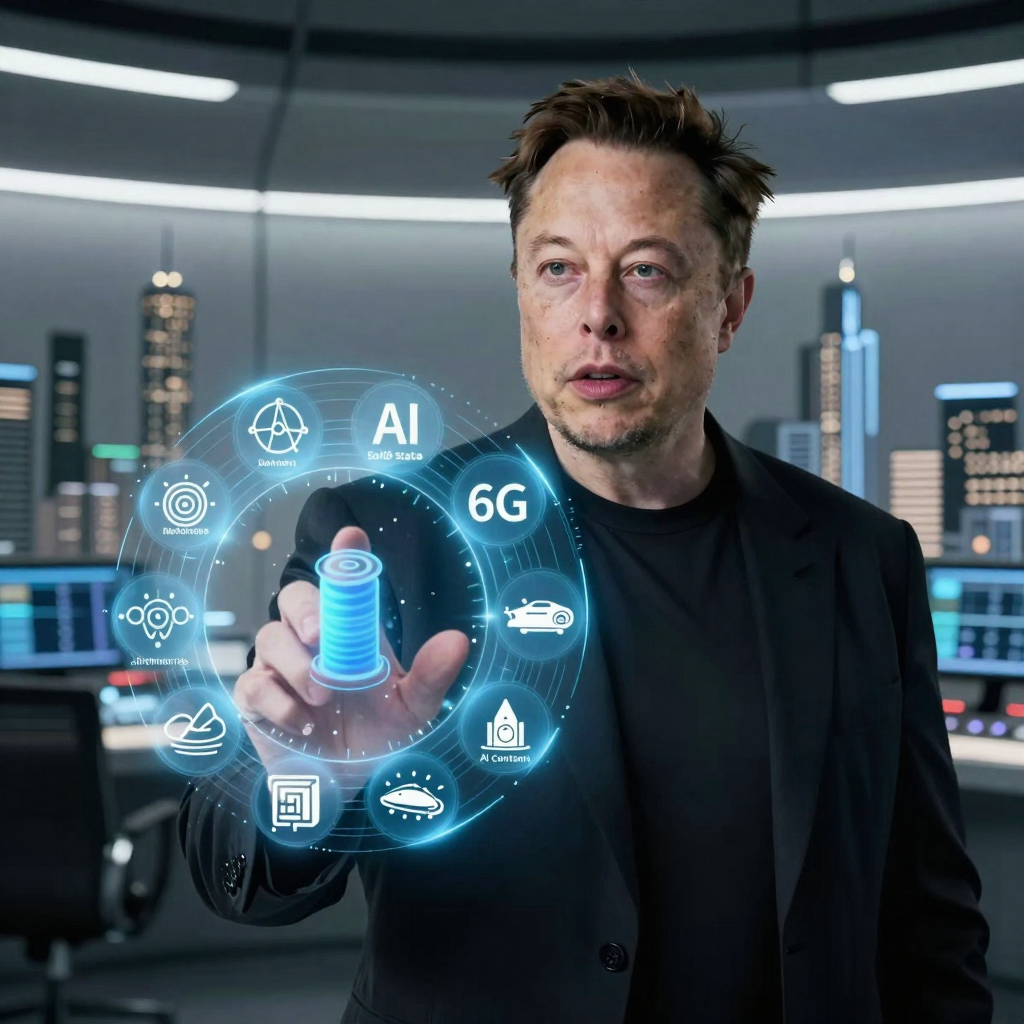
Breakthrough Technologies 2026: Shaping the Future Today
Breakthrough technologies 2026 are set to reshape how we live, work, and interact with the world. From quantum computing breakthroughs to AI that understands context, the horizon glimmers with possibilities that promise to accelerate progress across every sector. Yet, alongside this excitement lies a prudent reminder: rapid innovation can bring ethical dilemmas, security challenges, and societal disruption if not guided responsibly. In this article, we explore ten game‑changing advancements poised to dominate the next year, providing insight into their underlying science, real‑world evidence already emerging, and the tangible benefits they could deliver. By weighing potential rewards against foreseeable risks, we aim to equip readers with a balanced perspective—one that celebrates ingenuity while advocating for thoughtful stewardship. Stay with us as we unpack each technology, examine its trajectory, and reveal how it could transform everyday life in the near future. These innovations not only promise economic growth but also demand collaborative governance to ensure inclusive benefits.
Why breakthrough technologies 2026 will reshape our world
The technology horizon in 2026 looks unlike any previous decade. Quantum processors are moving from laboratory prototypes to cloud‑accessible services, promising exponential speed‑ups for drug discovery and climate modeling. Meanwhile, generative AI models have matured into reliable co‑creators, helping engineers design lighter aircraft structures and artists produce immersive virtual worlds in real time. Edge computing combined with 6G‑grade connectivity is bringing low‑latency intelligence to remote sensors, enabling autonomous farms to optimise water use and smart grids to balance renewable supply without human intervention. These advances converge to form a fertile ecosystem where data, compute power, and algorithms reinforce each other, accelerating innovation cycles across health, energy, and transportation. However, the rapid rollout also raises serious concerns. The same AI tools that automate creativity can amplify misinformation, while quantum decryption threatens current encryption standards, demanding urgent upgrades to cybersecurity frameworks. Ethical stewardship will be essential to ensure inclusive access, prevent bias in automated decisions, and protect privacy as devices become ever more embedded in daily life. In short, 2026 stands as a tipping point where breakthrough technologies can reshape society—provided we navigate their risks with foresight and responsibility. Policymakers, industry leaders and citizens must collaborate to draft transparent guidelines that balance innovation with societal well‑being.
Top 10 breakthrough technologies 2026
| Technology | Domain | Expected Impact | Maturity (2026) |
|---|---|---|---|
| Quantum Computing | Computing | Enables solving complex optimization problems, accelerating drug discovery, climate modeling | Commercially available with 100+ qubit processors (early adopter stage) |
| AI‑Driven Biotech | Biotechnology | Automates protein design, reduces drug development time by up to 50% | Mature AI platforms integrated in labs (pilot to rollout) |
| Solid‑State Batteries | Energy Storage | Increases energy density, speeds charging, extends EV range | Mass production begins, 2026 models in market |
| Fusion Power (Compact Tokamak) | Energy | Provides near‑limitless clean electricity, reduces carbon emissions | Demonstration plants achieving net‑positive output |
| Neuromorphic Chips | Hardware | Allows low‑power edge AI for IoT, real‑time pattern recognition | Early commercial products in robotics and wearables |
| 6G Wireless Networks | Telecommunications | Offers terabit‑per‑second speeds, ultra‑low latency for AR/VR | Pilot deployments in select cities |
| CRISPR‑based Gene Therapies | Medicine | Targets genetic diseases at the DNA level, curative potential | FDA approvals for multiple indications |
| Autonomous Shipping | Transportation | Reduces crew costs, improves safety, optimizes routes | Fully autonomous cargo vessels in operation |
| Sustainable Hydrogen Production (Electrolysis) | Energy | Scalable green hydrogen for industry and transport | Commercial electrolyzers >1 GW capacity |
| AI‑Generated Content Platforms | Media | Creates high‑quality text, image, video at scale, democratizing creativity | Widely adopted by marketers and creators |
Quantum Computing: a breakthrough technology 2026 catalyst.
Quantum computers solve certain problems exponentially faster than classical machines. They enable precise material simulations, optimization of logistics networks, and breakthrough drug discovery.
Key benefits
- Drastically reduced computation time for complex models.
- New possibilities in cryptography and secure communications.
- Accelerated innovation cycles across industries.
Associated risks
- Potential to break current encryption standards, threatening data privacy.
- High energy consumption and costly hardware maintenance.
Synthetic Biology: a breakthrough technology 2026 catalyst.
Synthetic biology rewrites living cells to produce medicines, sustainable fuels, and smart materials. By editing genomes, companies can create tailor‑made organisms that perform specific tasks.
Key benefits
- Rapid development of vaccines and therapeutic proteins.
- Reduction of carbon footprint through bio‑based production.
- Creation of biodegradable alternatives to plastics.
Associated risks
- Unintended ecological impacts if engineered organisms escape containment.
- Ethical concerns over gene editing in humans and animals.
Edge AI: a breakthrough technology 2026 catalyst.
Edge AI brings machine‑learning inference directly to devices, eliminating the need for constant cloud connectivity. This shift empowers real‑time decision making in autonomous vehicles, industrial IoT, and wearable health monitors.
Key benefits
- Lower latency improves safety and user experience.
- Decreased bandwidth costs and enhanced data privacy.
- Scalable deployment across millions of low‑power devices.
Associated risks
- Limited processing power may constrain model complexity.
- Security vulnerabilities at the device level could be exploited.
Together, these three breakthrough technologies are set to reshape economies, health systems, and daily life by 2026. While they promise unprecedented efficiency and new capabilities, careful governance and proactive risk mitigation will be essential to harness their full potential responsibly.
2026 has already shown how breakthrough technologies can reshape daily life. From quantum‑ready processors to AI‑driven health diagnostics, these advances promise faster decisions, greener energy, and more personalized experiences. Yet each wave brings challenges—privacy concerns, talent gaps, and the need for responsible governance. By staying aware of both opportunities and risks, societies can steer these innovations toward inclusive growth.
That balanced optimism mirrors SSL Labs’ core philosophy. We believe intelligent systems should amplify human potential while respecting ethical standards and data security. Our work focuses on turning cutting‑edge research into reliable, bias‑aware solutions that businesses can trust.
SSL Labs is a Hong Kong‑based AI startup delivering end‑to‑end machine‑learning pipelines, natural‑language processors, and computer‑vision platforms. Our offerings include custom AI application development, predictive analytics, and responsible‑AI consulting. Guided by transparent models and privacy‑first design, we help companies adopt emerging technologies without compromising trust.
Our ethical AI framework ensures every model undergoes rigorous bias testing, explainability reviews, and compliance checks, giving you confidence in long‑term deployment. Partnering with us means you stay ahead of the curve while safeguarding your brand reputation.
If you’re ready to explore how 2026’s innovations can power your next strategic move, get in touch with our team. Let’s build a future where technology serves people responsibly.
Frequently Asked Questions
Q1: Which breakthrough technologies 2026 will have the biggest economic impact?
A: The convergence of generative AI, quantum‑ready processors, and autonomous robotics is expected to boost productivity across manufacturing, finance, and healthcare, driving the largest GDP gains.
Q2: How will breakthrough technologies 2026 reshape the job market?
A: Automation will replace routine tasks, while new roles emerge in AI ethics, data stewardship, and quantum algorithm design, demanding upskilling and lifelong learning.
Q3: What risks accompany the adoption of breakthrough technologies 2026?
A: Concerns include algorithmic bias, cybersecurity vulnerabilities in quantum‑enhanced networks, and environmental footprints of large‑scale AI training, requiring robust governance.
Q4: Which industries will benefit most from breakthrough technologies 2026?
A: Healthcare, energy, and logistics stand to gain the most, thanks to AI‑driven diagnostics, smart‑grid optimization, and autonomous supply‑chain management.
Q5: When can businesses expect to see tangible results from breakthrough technologies 2026?
A: Early adopters are already piloting projects; measurable ROI typically appears within 12‑18 months as models mature and integration costs fall.