


AI Agents vs. Generative AI: The Next Leap in Intelligent Automation
AI Agents are reshaping how software interacts with data and users. Unlike generic models, they act autonomously, make decisions, and execute tasks in real time. This emerging capability promises to push intelligent automation beyond scripted workflows. However, the hype can obscure practical limits and hidden risks. In this article we take a measured look at what AI Agents really deliver, where they differ from pure generative AI, and what enterprises should watch before deploying them at scale. We will examine the underlying architectures, the data dependencies, and the governance challenges that accompany autonomous behavior. By comparing concrete use‑cases, we reveal both the efficiency gains and the failure modes that can arise when agents operate without clear oversight. Our analysis draws on recent research, industry pilots, and regulatory guidance to help readers separate viable opportunities from speculative promises. The goal is to provide a balanced perspective that informs strategic planning and risk management for organizations considering this technology. We also discuss measurement frameworks that can quantify agent performance and align outcomes with business KPIs, ensuring that automation adds measurable value without compromising control.
- How AI Agents differ from generative models in purpose and operation.
- Real‑world scenarios illustrating benefits and pitfalls of autonomous agents.
- Key considerations for governance, security, and sustainable deployment.
What are AI Agents?
AI agents are autonomous software entities that perceive their environment, make decisions, and act to achieve specific goals. Unlike traditional AI models that perform isolated tasks, agents combine perception, reasoning, and action in a loop that adapts over time. They gather data, evaluate options, and execute actions without constant human direction. Because they can learn from feedback and adjust strategies, AI agents become valuable for automation that requires flexibility and continuous improvement. They matter for businesses because they can handle end‑to‑end workflows, reduce manual oversight, and scale operations while maintaining quality.
Generative AI vs. AI Agents
Both generative AI and AI agents produce output, yet they serve different purposes. Generative models excel at creating novel content such as text, images, or code based on patterns learned from large datasets. In contrast, AI agents focus on decision‑making and task execution, often using generative components as part of a larger control loop. The distinction becomes clear when we examine their capabilities:
- Goal orientation – Generative AI predicts the next token; AI agents pursue defined objectives and plan actions to meet them.
- Interaction loop – Generative AI produces a single output; AI agents continuously sense, decide, and act in real time.
- Autonomy level – Generative AI requires prompts for each request; AI agents can operate independently after initial setup.
AI Agents vs. Generative AI – Feature Comparison
| Feature | AI Agents | Generative AI |
|---|---|---|
| Goal‑orientation | Designed to achieve specific tasks or objectives autonomously. | Generates content based on prompts without a fixed end‑goal. |
| Autonomy | Operates with decision‑making loops and can act independently. | Relies on user input for each generation cycle. |
| Contextual Reasoning | Maintains long‑term context across interactions and can plan ahead. | Uses short‑term context within a single prompt response. |
| Training Data Requirements | Trained on task‑specific datasets plus reinforcement signals. | Trained on massive, diverse corpora to learn general patterns. |
| Typical Use‑Cases | Workflow automation, autonomous assistants, decision support. | Text creation, image synthesis, code generation, brainstorming. |
Key Benefits of Agentic AI in Intelligent Automation
-
Accelerated Decision‑Making
Agentic AI can evaluate data, run simulations, and select actions within seconds, far faster than a human analyst. In high‑frequency trading, an AI agent processes market feeds and executes trades in real time, capturing price movements that would be missed by manual traders. -
Reduced Human Error
By automating repetitive verification steps, the system removes the slip‑ups that occur when people fatigue or misinterpret information. In radiology departments, an AI agent cross‑checks imaging reports against patient records, flagging mismatches that could lead to misdiagnosis. -
Scalable Workflow Orchestration
Agentic AI coordinates multiple micro‑services and adapts resource allocation as demand fluctuates. A logistics company uses AI agents to route shipments, balance warehouse loads, and update delivery schedules, handling thousands of orders without needing additional staff. -
Enhanced Adaptability
The agents continuously learn from feedback and can reconfigure processes when conditions change. In customer support, an AI agent modifies its response strategy after detecting a surge in a new product issue, ensuring callers receive relevant solutions instantly.
Collectively, these advantages position agentic AI as a catalyst for faster, safer, and more resilient automation across industries.
CONCLUSION
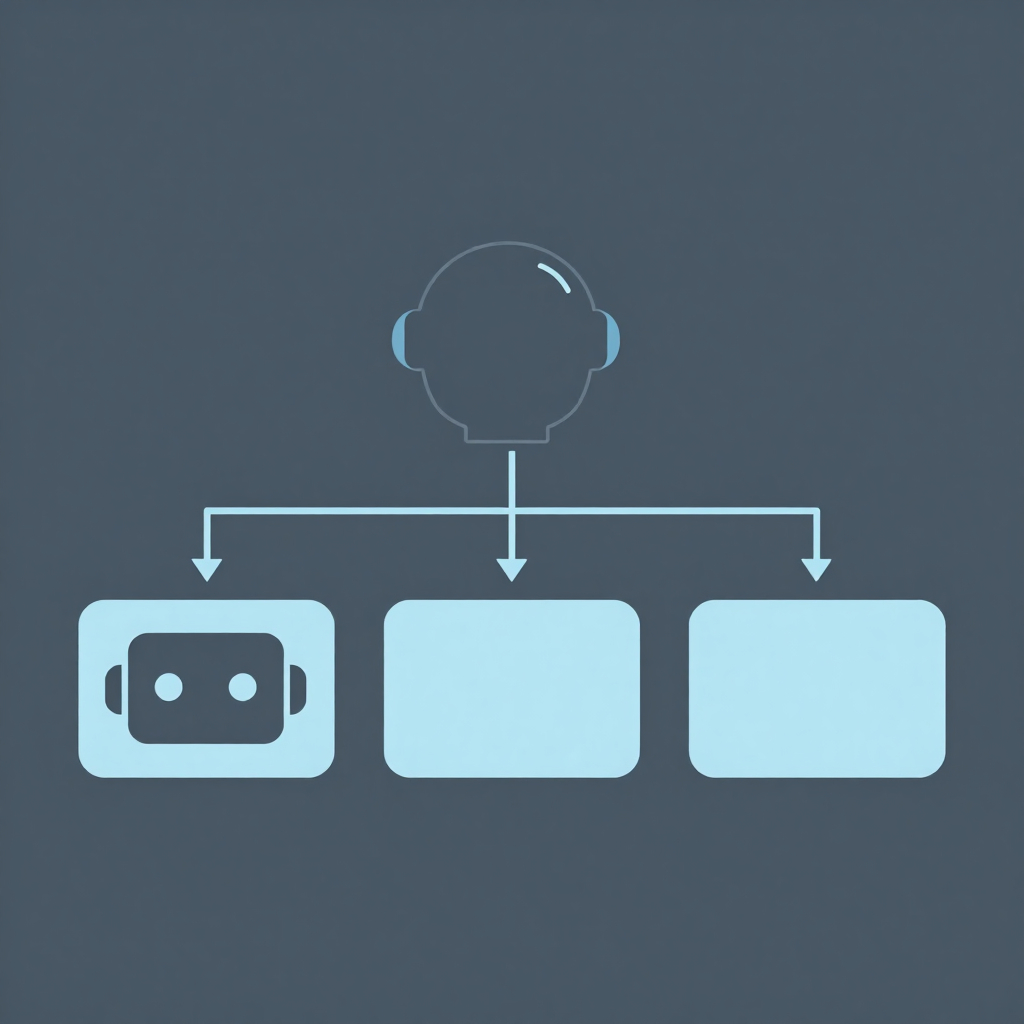
The analysis shows that generative AI excels at content creation, while AI agents bring autonomy, decision‑making and real‑time interaction to workflows. Because agents can orchestrate multiple models and tools, they unlock efficiencies that static generation cannot match. Therefore, AI agents represent the next leap in intelligent automation, turning insight into action without human bottlenecks. As businesses seek scalable, ethical solutions, partnering with a trusted provider becomes essential.
SSL Labs – Company Profile
SSL Labs is a Hong Kong‑based startup dedicated to advancing artificial intelligence. The firm prioritizes ethical AI, ensuring transparency, bias mitigation and privacy compliance. Its core offerings include:
- AI Application Development: custom chatbots, virtual assistants, recommendation engines.
- Machine Learning Solutions: end‑to‑end pipelines using TensorFlow, PyTorch, Scikit‑learn.
- NLP and Computer Vision: text analysis, translation, image and video recognition.
- Predictive Analytics and Automation: forecasting models and robotic process automation.
- AI Research and Prototyping: generative AI, reinforcement learning, edge AI.
With a proven track record of boosting client revenues by up to 30%, SSL Labs combines cutting‑edge technology with a commitment to sustainable, secure AI deployment. Its solutions are built on robust security principles inspired by SSL protocols, ensuring data integrity and privacy at every layer.
Ready to future‑proof your operations? Contact SSL Labs today to accelerate your AI journey.
Frequently Asked Questions (FAQs)
Q1: What is an AI Agent?
A: An AI Agent is a software entity that can perceive its environment, make decisions, and act autonomously to achieve specific goals.
Q2: How does generative AI differ from traditional AI models?
A: Generative AI creates new content—text, images, code—by learning patterns from data, whereas traditional models primarily classify or predict existing data.
Q3: Can AI Agents leverage generative AI for automation?
A: Yes, agents can integrate generative models to produce dynamic outputs, such as drafting emails or designing prototypes, enhancing end‑to‑end automation.
Q4: What are the main challenges when deploying AI Agents in business processes?
A: Challenges include ensuring data quality, managing bias, maintaining security, and aligning agent actions with organizational policies.
Q5: How do AI Agents contribute to scaling automation efforts?
A: By operating continuously and handling complex, variable tasks, agents reduce manual effort and enable organizations to scale workflows without proportional staffing increases.