

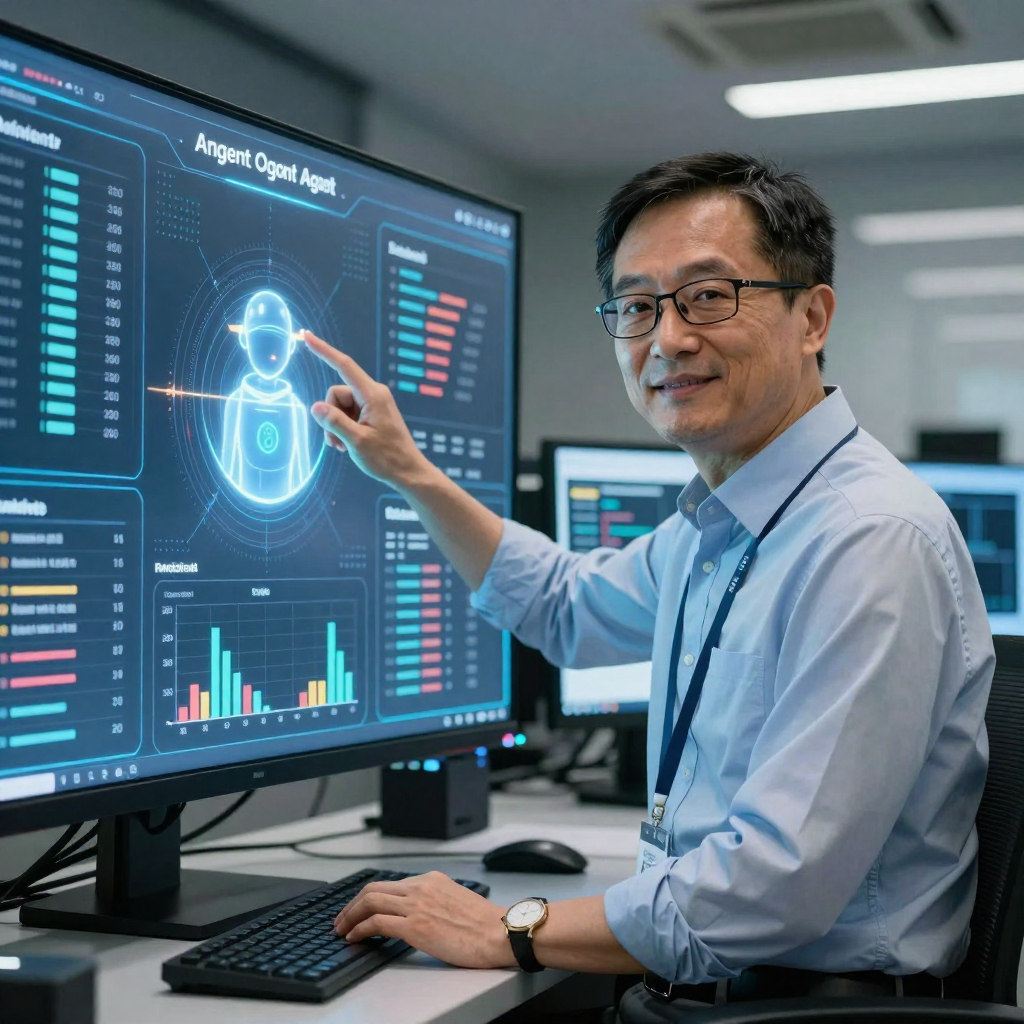
Long-Running AI Agents: Ensuring Reliability at Scale
Long-running AI agents are becoming the backbone of modern automation, handling tasks that stretch from hours to days without human intervention. As these agents operate continuously, reliability moves from a nice‑to‑have feature to a non‑negotiable requirement. Unexpected failures can cascade into costly downtime, data loss, or compromised decision‑making. Therefore, developers must embed robust monitoring, fault tolerance, and self‑healing mechanisms from the start. This article explores proven strategies that turn fragile bots into resilient services. By focusing on deterministic behavior, state management, and graceful degradation, teams can maintain performance even under heavy load or network instability. The goal is simple: keep the AI agent alive, accurate, and trustworthy for the duration of its mission. Moreover, compliance regulations increasingly demand audit trails and explainability, pushing engineers to adopt transparent logging and versioned model repositories. These practices not only satisfy legal standards but also simplify troubleshooting when anomalies arise. Investing in reliability pays dividends in user trust.
- Robust monitoring and alerting
- State checkpointing and graceful recovery
- Transparent logging with version control
Understanding Long‑Running AI Agents
Long‑running AI agents are autonomous software entities that operate continuously over extended periods—days, weeks, or even months—while interacting with dynamic environments and data streams. Unlike batch models that run once and stop, these agents maintain state, adapt their behavior, and make decisions in real time. For example, an autonomous supply‑chain optimizer monitors inventory levels, demand forecasts, and transportation constraints 24 hours a day, adjusting orders on the fly.
Typical use‑cases include:
- Customer‑service assistants that handle ongoing conversations across multiple channels.
- Predictive maintenance systems that analyze sensor data from industrial equipment around the clock.
- Financial trading bots that execute strategies in live markets with millisecond latency.
- Smart‑city controllers that balance traffic flow, energy consumption, and public safety continuously.
Because they run indefinitely, long‑running AI agents require robust harnesses that provide monitoring, error‑handling, and graceful degradation. Without such infrastructure, a single fault can cascade, leading to data corruption, security breaches, or costly downtime. Harnesses also enforce version control, resource limits, and observability, ensuring that the agent remains reliable, compliant, and performant throughout its lifecycle.
These agents must preserve context across sessions, react instantly to new inputs, and stay operational despite hardware failures or network partitions. They often run on cloud‑native platforms that auto‑scale, yet they still need explicit throttling to avoid runaway costs. Security policies must be enforced continuously, and every decision should be logged for audit trails, especially in regulated sectors such as finance or healthcare.
Key characteristics that distinguish long‑running AI agents from short‑lived scripts include:
- Persistent state – stores knowledge of past interactions to inform future actions.
- Real‑time adaptation – updates models or policies on‑the‑fly as data evolves.
- High availability – employs redundancy and failover to guarantee uptime.
- Resource efficiency – monitors CPU, memory, and energy consumption to stay within budgets.
- Compliance & auditability – records decisions and accesses for regulatory review.
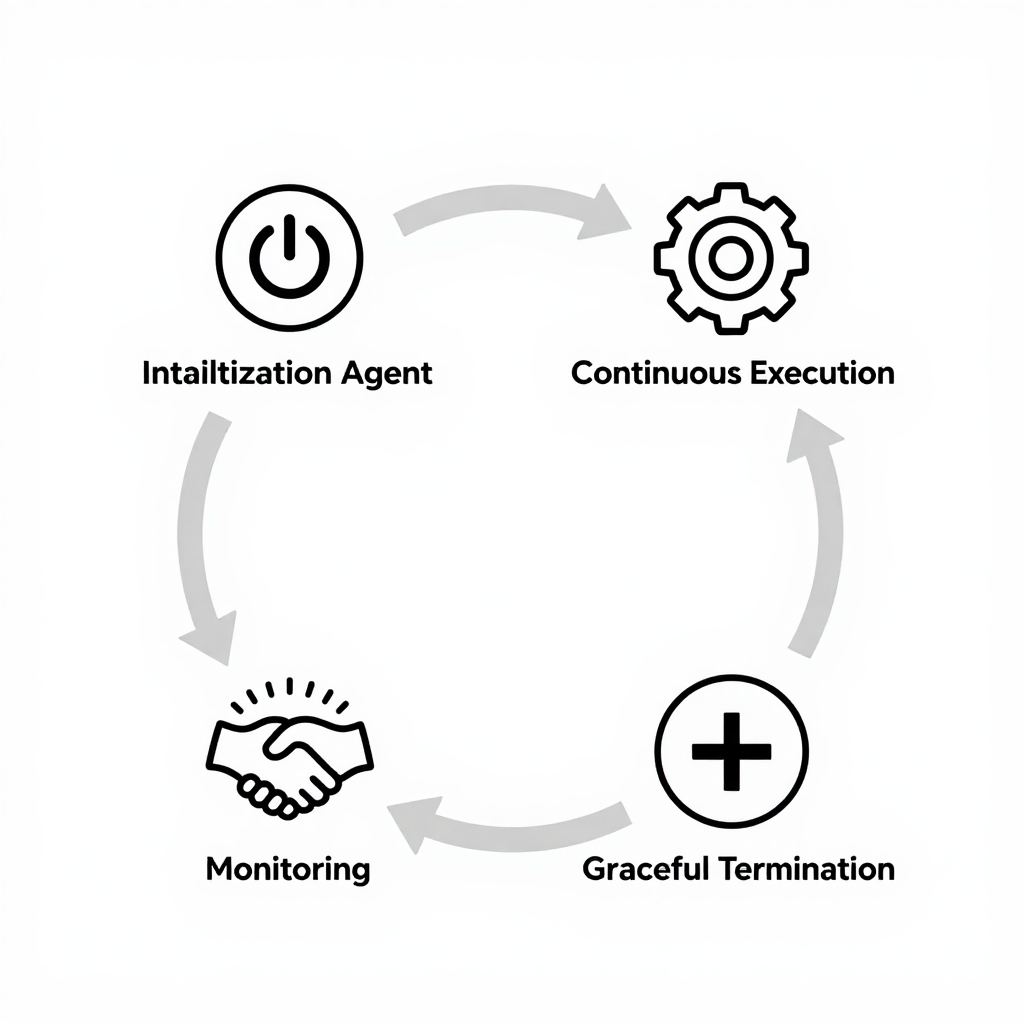
Challenges for Long‑Running AI Agents
- Model drift
- Resource exhaustion
- Failure propagation
Long‑running AI agents face several reliability obstacles that can undermine continuous operation. Model drift occurs when the data distribution shifts over time, causing predictions to degrade without obvious alerts. Resource exhaustion—CPU, memory, or GPU limits—accumulates as agents process streams, leading to latency spikes or crashes. Failure propagation spreads localized errors across interconnected services, amplifying impact. In addition, debugging difficulty hampers engineers because internal states evolve continuously, logs become massive, and traditional breakpoints cannot capture transient faults. Moreover, the lack of deterministic checkpoints makes reproducing intermittent bugs nearly impossible, forcing engineers to rely on expensive post‑mortem analysis. Conventional monitoring, static testing, and simple retries often miss gradual degradation or hidden dependencies, so they fail to guarantee uptime. Traditional observability stacks, built for stateless services, cannot capture the evolving internal policy graphs that drive agent decisions. To address these gaps, newer harness frameworks introduce systematic state checkpointing, adaptive resource scaling, and causal tracing that isolate failures before they cascade. They also adapt to scale. By integrating continuous validation, resource quotas, and automated root‑cause extraction, the harnesses promise to keep long‑running AI agents robust and maintainable. The upcoming sections will compare such harness solutions, showing how they restore predictability to long‑running AI agents.
Reliability Harness Techniques for Long‑Running AI Agents
| Technique | Description | Pros | Cons |
|---|---|---|---|
| Checkpointing | Periodically saves agent state to persistent storage. | Enables quick recovery after crashes; reduces lost work. | Adds storage overhead; may pause execution briefly. |
| Health Monitoring | Continuously tracks metrics like latency, errors, and resource use. | Detects issues early; triggers alerts or automated actions. | Requires additional instrumentation; false positives possible. |
| Graceful Degradation | Switches to simplified models or reduced functionality when resources are scarce. | Maintains core service availability; prevents total failure. | May lower output quality; needs fallback logic. |
| Auto‑Restart | Automatically restarts the agent process upon failure detection. | Minimizes downtime; simple to implement. | Can hide underlying bugs; restart loops if not controlled. |
CONCLUSION
Long‑running AI agents unlock powerful automation, but without robust harnesses they can drift, overload resources, or produce inconsistent outputs. By integrating monitoring, checkpointing, and adaptive throttling, the new harnesses detailed in this article dramatically improve reliability, scalability, and maintainability of autonomous systems. These techniques enable enterprises to deploy AI agents that operate safely over weeks or months, delivering continuous value while minimizing operational risk.
About SSL Labs – SSL Labs is a Hong Kong‑based AI startup that builds reliable, scalable AI solutions across machine learning, NLP, computer vision, and automation. Our expert team delivers custom models, end‑to‑end pipelines, and ethical AI consulting, helping clients boost efficiency and revenue with secure, human‑centric technology.
Ready to future‑proof your AI initiatives? Explore SSL Labs’ services today and let our experts design the robust AI harnesses your long‑running agents need.
Frequently Asked Questions (FAQs)
-
What are long-running AI agents and why are they challenging?
Long-running AI agents are autonomous systems that operate continuously over extended periods, handling complex tasks without human intervention. Their challenges include drift, resource exhaustion, and unpredictable failures, which can degrade performance and reliability. -
How does the new harness improve reliability for long-running AI agents?
The new harness adds a supervisory layer that monitors state, checkpoints progress, and automatically restarts components when anomalies arise. By doing so, it keeps long-running AI agents stable, reduces downtime, and ensures consistent output across diverse workloads. -
Can existing automation pipelines integrate these harnesses without major rewrites?
Integration is straightforward because the harness exposes standard APIs and plug‑in points compatible with most orchestration tools. Teams can adopt it incrementally, wrapping existing modules without rewriting core logic, which accelerates deployment while preserving current investments. -
What monitoring metrics should be tracked to ensure stable operation?
Key metrics include latency variance, success‑rate of task completions, resource utilization trends, and checkpoint frequency. Tracking these indicators in real time enables proactive scaling, anomaly detection, and timely interventions to maintain optimal performance of long-running AI agents. -
Are there security considerations unique to long-running AI agents?
Security for long-running AI agents must address persistent exposure, data leakage during checkpoints, and integrity of model updates. Employing encrypted state storage, strict access controls, and continuous verification safeguards the agents against attacks throughout their extended lifecycle.