

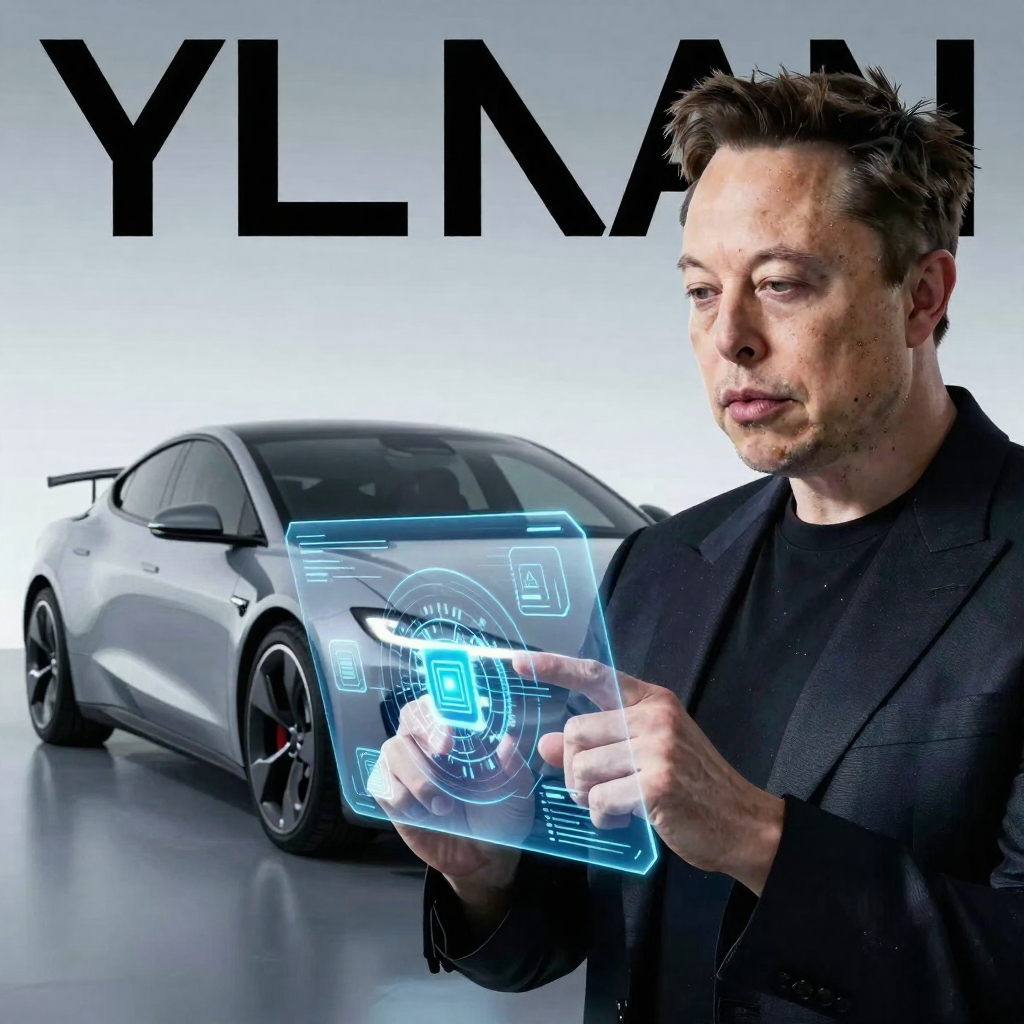
Physical AI in automotive: Driving the Future with Smarter Cars
Can cars think, feel, and adapt like living beings? Physical AI in automotive is turning that bold vision into reality. Imagine a vehicle that senses road conditions, predicts driver fatigue, and reconfigures its dynamics on the fly—all without a cloud connection. This new wave of intelligence merges physics‑based modeling with cutting‑edge machine learning, creating systems that understand the world as humans do, but operate with the precision of silicon.
In this article we explore how Physical AI is reshaping the automotive landscape. We’ll break down the core technologies behind sensor‑fusion, real‑time simulation, and edge computing that power these smart machines. You’ll discover real‑world case studies from leading manufacturers who have already deployed self‑optimizing suspension, adaptive energy management, and predictive safety features. We’ll also look ahead to future trends such as autonomous fleets, digital twins for vehicle design, and the ethical considerations of giving cars a physical sense of awareness. By the end, you’ll see why Physical AI in automotive is not just a buzzword—it’s the engine driving the next generation of safer, greener, and more intuitive transportation. Stay tuned as we dive deep into the tech, the triumphs, and the transformative impact that Physical AI will have on every road we travel.
What is Physical AI in automotive?
Physical AI in automotive merges real‑world physics models with machine‑learning algorithms, allowing vehicles to reason about motion, forces, and material behavior as they drive. Unlike conventional AI that relies solely on pattern recognition from data, Physical AI embeds the laws of mechanics directly into the decision‑making loop, producing predictions that are both data‑driven and physically plausible.
- Traditional AI: learns from historical sensor logs; Physical AI: incorporates equations of motion and friction models.
- Traditional AI: can misinterpret out‑of‑distribution scenarios; Physical AI: constrained by physics, reducing unsafe guesses.
- Traditional AI: often requires massive labeled datasets; Physical AI: leverages simulators and synthetic data, cutting training costs.
- Traditional AI: limited explainability; Physical AI: offers transparent reasoning tied to measurable forces.
- Traditional AI: struggles with rare edge cases; Physical AI: extrapolates safely using physical laws.
Because cars operate in a constantly changing environment, Physical AI in automotive equips autonomous systems with the ability to anticipate how a vehicle will respond to road curvature, weather‑induced traction loss, or sudden obstacles. This leads to smoother ride comfort, faster emergency braking, and more efficient energy use for electric drivetrains. Manufacturers can accelerate development cycles by testing virtual prototypes that obey real physics, while regulators gain confidence in safety assessments. In short, Physical AI turns the promise of fully autonomous, safer, and greener mobility into a tangible reality.
Major OEMs such as Toyota, BMW, and Tesla are already investing in Physical AI research, integrating it into next‑generation driver assistance modules and full‑self‑driving platforms. As the technology matures, consumers can expect vehicles that not only think faster but also move smarter, delivering unprecedented safety and efficiency on every road.
| Feature | Traditional AI | Physical AI |
|---|---|---|
| Data Processing Location | Cloud servers or central ECUs | Embedded edge hardware within vehicle components |
| Latency | Higher due to network round‑trip | Near‑zero, processed on‑board |
| Power Consumption | Moderate to high, dependent on data transmission | Optimized, lower energy per inference |
| Scalability | Scales with cloud resources, limited by connectivity | Scales through modular hardware, but bounded by vehicle design |
| Safety Impact | Relies on remote updates, potential latency risks | Improves real‑time decision making, enhances safety |
Physical AI in automotive: Transforming Vehicle Design and Safety
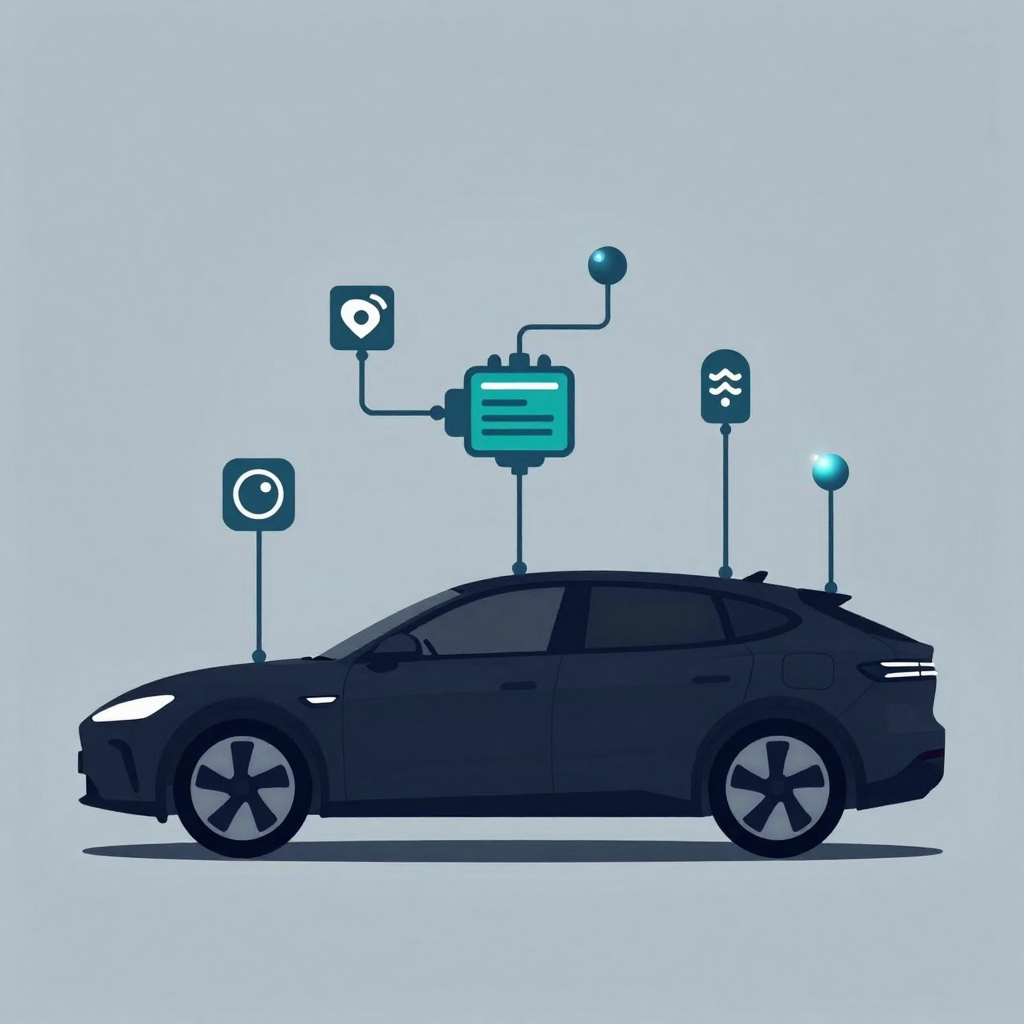
The convergence of AI chips, high‑resolution sensors, and automotive‑grade software has unlocked a new paradigm where intelligence lives at the edge of the vehicle. This shift empowers automakers to move beyond cloud‑dependent features and deliver instantaneous, safety‑critical decisions directly on the road.
- Edge sensor fusion
- Combines lidar, radar, camera, and inertial data at the chip level, delivering millisecond‑level situational awareness.
- Benefits: reduced bandwidth costs, real‑time obstacle detection, and enhanced robustness against sensor failures.
- Predictive maintenance
- Continuously monitors engine vibration, brake wear, and battery health using on‑board AI models that learn from historical patterns.
- Benefits: anticipates failures before they occur, cuts downtime, and extends vehicle lifespan while lowering ownership costs.
- Adaptive driver assistance
- Adjusts cruise control, lane‑keeping, and emergency braking based on driver behavior, road conditions, and traffic flow, all processed locally.
- Benefits: personalized safety envelopes, smoother rides, and higher driver confidence.
Together, these Physical AI in automotive solutions create a feedback loop where the vehicle not only reacts to its environment but also predicts and adapts, paving the way for fully autonomous fleets. As chip manufacturers push power efficiency and automotive OEMs integrate these capabilities, the next decade will see cars that are smarter, safer, and more sustainable than ever before. These advances not only enhance driver confidence but also lay the groundwork for greener transportation through optimized energy use.
CONCLUSION
Physical AI in automotive is reshaping how vehicles perceive, decide, and act on the road. By embedding intelligent perception directly into sensors and control units, manufacturers gain faster reaction times, lower latency, and more reliable safety features. The technology also reduces hardware complexity, cutting costs while enabling advanced driver‑assistance and autonomous functions that adapt in real time to changing environments. As ecosystems mature, we can expect broader adoption across electric, connected, and shared mobility platforms, driving both consumer confidence and industry growth.
SSL Labs, a Hong Kong‑based AI startup, is positioned to lead this transformation. We specialize in building scalable Physical AI applications for automotive, combining machine‑learning pipelines, computer‑vision models, and edge‑optimized deployment. Our solutions prioritize ethical AI, data privacy, and robust security—drawing inspiration from SSL protocols to deliver transparent, bias‑free performance. With a team of seasoned engineers and researchers, SSL Labs offers end‑to‑end services from custom model development to cloud‑native integration, helping OEMs and Tier‑1 suppliers accelerate their Physical AI roadmaps.
Looking ahead, the convergence of Physical AI with 5G connectivity and sustainable energy will unlock unprecedented levels of efficiency and safety, and SSL Labs remains committed to driving this evolution through continuous innovation and partnership.
Frequently Asked Questions (FAQs)
Q1: What is Physical AI in automotive?
A: Physical AI fuses real‑time sensor data with machine‑learning models to predict vehicle dynamics, letting cars react faster and more precisely than human drivers.
Q2: How does Physical AI improve safety on the road?
A: It constantly scans surroundings, anticipates hazards, and takes corrective actions instantly, lowering collision risk and improving braking and cruise‑control safety.
Q3: What are the main challenges when implementing Physical AI in cars?
A: Key hurdles include sensor integration, low‑latency processing, meeting safety standards, and training models for varied weather and traffic.
Q4: How can SSL Labs help automotive companies adopt Physical AI?
A: SSL Labs provides full‑stack AI development, custom sensor‑fusion pipelines, rigorous validation, and ongoing support to speed safe Physical AI deployment.
Q5: Is Physical AI ready for mass‑market vehicles today?
A: Pilot projects are promising, but mass‑market rollout still needs regulatory clearance, scalable hardware, and further refinement—areas where SSL Labs partners with OEMs.