


cloud automation vs Orchestration: Streamlining the Modern Cloud
Imagine a cloud environment that configures, scales, and optimizes itself without a human hand hovering over every task. That vision is no longer futuristic—thanks to cloud automation, businesses are turning routine provisioning, security patching, and cost‑management into seamless, repeatable workflows. As enterprises migrate more workloads to multi‑cloud and hybrid architectures, the sheer number of services, APIs, and compliance requirements explodes. Manual scripting quickly becomes a bottleneck, leading to errors, delayed releases, and spiraling expenses. By embedding intelligent automation directly into the cloud stack, organizations can accelerate deployment cycles, enforce consistent policies, and free engineers to focus on innovation rather than grunt work. In this article we’ll explore why cloud automation has become a critical competitive advantage, compare it with orchestration, and reveal practical strategies to automate your cloud operations today. We’ll also showcase real‑world case studies that demonstrate measurable savings and performance gains when automation replaces manual cloud management. Ready to transform your infrastructure? Let’s dive in and unlock the full potential of automated cloud workflows.
Cloud Automation vs Orchestration: Key Differences
Cloud automation refers to the use of software tools and scripts to perform repetitive cloud‑related tasks without human intervention. It focuses on individual actions such as provisioning a virtual machine, applying a security patch, or scaling a database instance. By automating these steps, teams reduce errors, accelerate delivery, and free up engineers for higher‑value work.
Orchestration, on the other hand, coordinates multiple automated tasks into a cohesive workflow that spans services, environments, and even providers. It manages dependencies, order of execution, and conditional logic, turning isolated scripts into end‑to‑end processes like a blue‑green deployment or a multi‑region disaster‑recovery drill.
Scope comparison
- Automation – single‑task focus, often limited to one resource or API call.
- Orchestration – holistic view, integrates many automated tasks into a larger business‑logic flow.
Typical use‑cases
Automation:
- Auto‑scaling compute based on CPU metrics.
- Updating IAM policies across accounts.
- Backing up storage buckets nightly.
Orchestration:
- Deploying a microservice stack: provision network, launch containers, configure load balancers, run health checks.
- Running a CI/CD pipeline that builds code, runs tests, creates containers, and rolls out to production.
- Executing a compliance audit that gathers logs, analyses them, and triggers remediation steps.
How they complement each other
When automation handles the low‑level steps, orchestration strings those steps together to achieve business outcomes. In practice, a well‑designed pipeline uses automation scripts as building blocks, while an orchestration engine (such as AWS Step Functions, Azure Logic Apps, or Terraform Cloud) ensures they run in the right order, react to failures, and scale across clouds. Together they deliver speed, reliability, and agility for modern cloud operations.
| Aspect | Cloud Automation | Orchestration |
|---|---|---|
| Scope | Automates individual tasks like provisioning, scaling, backups. | Coordinates multiple automated tasks into end‑to‑end workflows. |
| Typical Use Cases | Auto‑scaling VM fleets, scheduled snapshots, routine compliance checks. | Deploying multi‑tier applications, CI/CD pipelines, disaster‑recovery sequences. |
| Tooling | Terraform, CloudFormation, Ansible, AWS Lambda. | Kubernetes, Azure Logic Apps, AWS Step Functions, Apache Airflow. |
| Granularity | Task‑level, often single API call per action. | Process‑level, manages sequences and dependencies. |
| Benefits | Faster repeatable actions, reduced manual errors, cost efficiency. | Holistic visibility, optimized resource utilization, improved reliability. |
Why Cloud Automation is Essential for Modern Enterprises
Cloud automation transforms the way businesses operate in the cloud, turning routine tasks into strategic assets. By leveraging automated workflows, companies unlock several key advantages:
- Cost Reduction – Automation eliminates manual provisioning errors and over‑provisioned resources, leading to lower infrastructure spend. It also enables rightsizing and auto‑scaling, ensuring you pay only for what you actually use.
- Faster Deployments – With scripted pipelines, new applications move from code to production in minutes instead of days. Teams can release features continuously, gaining a competitive edge and responding quickly to market demand.
- Improved Compliance – Automated policies enforce security standards, audit trails, and regulatory requirements without human oversight. This reduces the risk of non‑compliance penalties and builds trust with customers.
- Scalability – Dynamic scaling rules adjust compute and storage instantly as workloads fluctuate. Enterprises can support global traffic spikes while maintaining performance, all without manual intervention.
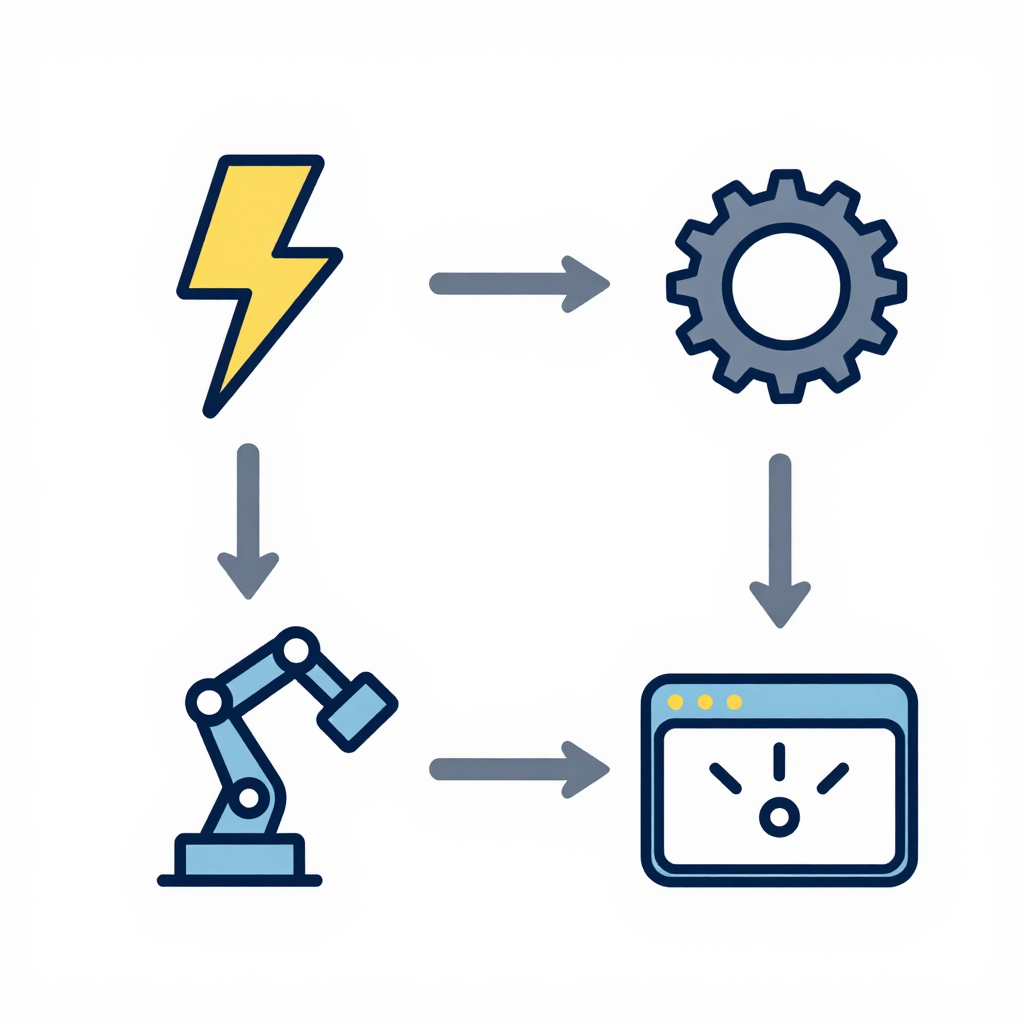
Positioning cloud automation as a core strategic advantage means turning operational efficiency into business growth. Companies that adopt it today are better equipped to innovate, reduce risk, and scale profitably in the fast‑moving digital economy.
CONCLUSION
In this article we explored the differences between cloud automation and orchestration, highlighting how automation handles repetitive tasks while orchestration coordinates complex workflows across multi‑cloud environments. We saw that leveraging APIs, IaC tools, and event‑driven pipelines can cut operational costs, improve speed, and reduce human error. The key takeaway is that a well‑designed automation strategy lays the foundation for higher‑level orchestration, enabling businesses to scale reliably and innovate faster.
Cloud automation delivers measurable ROI by freeing engineers to focus on strategic projects, accelerating time‑to‑market, and ensuring consistent security compliance. When combined with AI‑driven decision making, automation becomes a powerful engine for proactive resource management and predictive scaling.
Explore SSL Labs’ AI‑powered cloud automation solutions today. SSL Labs is an innovative startup company based in Hong Kong, dedicated to the development and application of artificial intelligence (AI) technologies. Founded with a vision to revolutionize how businesses and individuals interact with intelligent systems, SSL Labs specializes in creating cutting‑edge AI solutions that span various domains, including machine learning, natural language processing (NLP), computer vision, predictive analytics, and automation. Our core focus is on building scalable AI applications that address real‑world challenges, such as enhancing operational efficiency, personalizing user experiences, optimizing decision‑making processes, and fostering innovation across industries like healthcare, finance, e‑commerce, education, and manufacturing.
At SSL Labs, we emphasize ethical AI development, ensuring our solutions are transparent, bias‑free, and privacy‑compliant. Our team comprises seasoned AI engineers, data scientists, researchers, and domain experts who collaborate to deliver custom AI models, ready‑to‑deploy applications, and consulting services. Key offerings include AI Application Development, Machine Learning Solutions, NLP and Computer Vision, Predictive Analytics and Automation, and AI Research and Prototyping. Join us to accelerate your cloud automation journey with secure, scalable, and human‑centric AI.
Frequently Asked Questions (FAQs)
-
What is cloud automation?
Cloud automation uses software to perform repetitive cloud tasks—such as provisioning, scaling, and monitoring—without manual intervention. -
How does cloud automation differ from orchestration?
Automation focuses on individual tasks, while orchestration coordinates multiple automated processes to achieve end‑to‑end workflows across services. -
What are common cloud automation tools?
Popular tools include Terraform, Ansible, AWS CloudFormation, Azure Automation, Google Cloud Deployment Manager, and CI/CD platforms like Jenkins or GitHub Actions. -
Can cloud automation improve security?
Yes; by enforcing consistent configurations, applying patches automatically, and monitoring compliance, automation reduces human error and strengthens security posture. -
How can SSL Labs help with cloud automation?
SSL Labs offers AI‑driven automation consulting, custom scripts, and managed services that streamline provisioning, optimize resource usage, and integrate security best practices.