

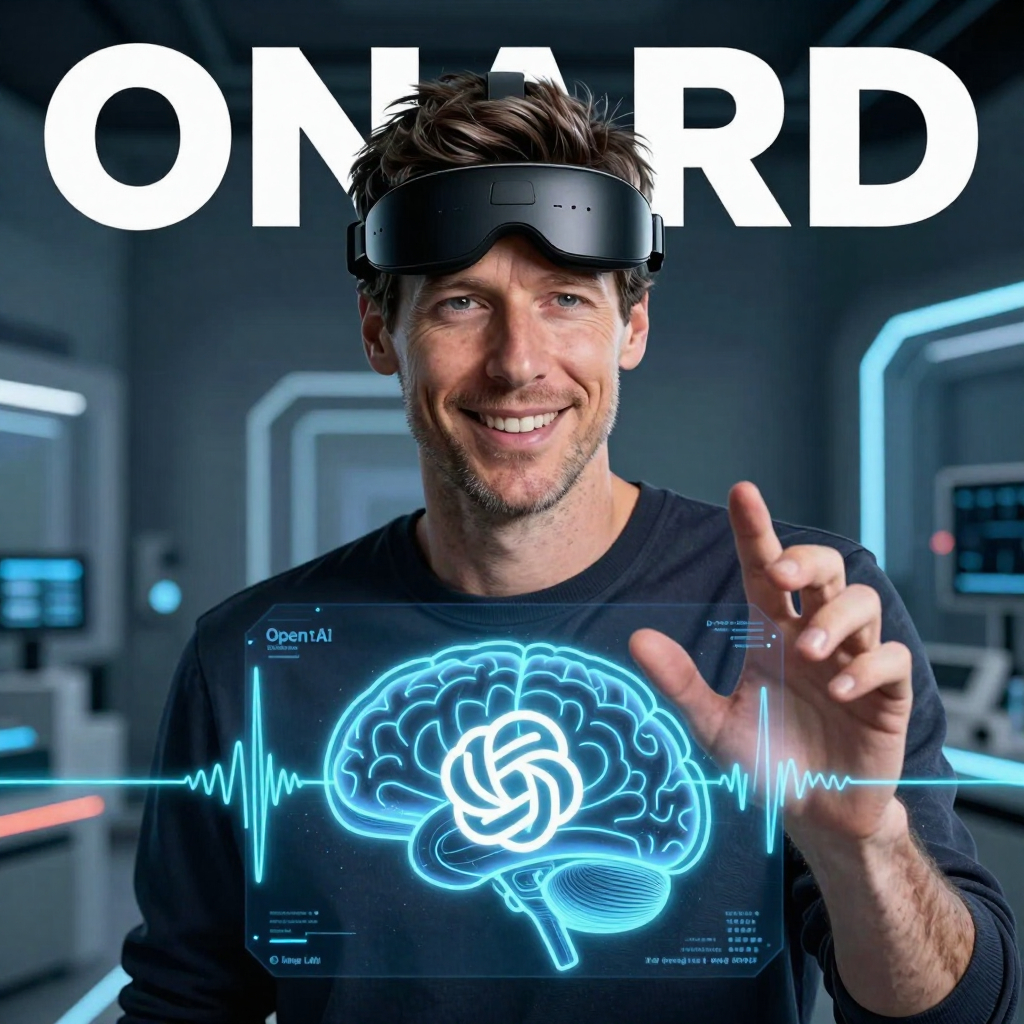
OpenAI invests in Merge Labs: Pioneering the Future of Brain-Computer Interfaces
OpenAI invests in Merge Labs, signaling a major boost for brain-computer interfaces. This partnership promises faster breakthroughs and wider adoption. The infusion of capital accelerates research and scales product development. As a result, BCI technology moves from labs to everyday life. Consumers can soon control devices with thoughts, enhancing accessibility and productivity. Meanwhile, investors see new revenue streams in health, gaming, and enterprise tools. Optimism runs high because the technology is becoming more reliable and affordable. Researchers report lower latency and higher signal fidelity, making seamless neural integration possible. With OpenAI’s expertise in AI, Merge Labs can refine decoding algorithms, turning raw brain signals into actionable commands. The industry therefore expects a surge in innovative applications that will reshape how we interact with digital worlds.
- Thought-driven control of smart home devices, enabling hands-free automation.
- Neural communication tools that translate brain activity into real-time language for people with speech impairments.
- Immersive gaming interfaces where players navigate virtual environments directly with their neural patterns.
What Are Brain-Computer Interfaces?
Brain-Computer Interfaces (BCIs) are systems that read neural activity and turn it into commands a computer can understand. By bypassing the muscles, they create a direct bridge between mind and machine, allowing thoughts to control apps, prosthetic limbs, or even a wheelchair. Think of a BCI as a translator that listens to the brain’s quiet whispers and rewrites them in a language computers speak.
The concept dates back to the 1970s, when early experiments recorded simple electrical spikes from animal cortexes. Over the decades, advances in sensor technology, machine-learning algorithms, and wireless hardware have transformed those laboratory curiosities into practical tools. Today, startups and research labs are deploying BCIs for gaming, neuro-rehabilitation, and communication for people with severe motor impairments.
Current applications span several fields:
- Signal acquisition – electrodes or non-invasive sensors capture raw brain waves.
- Signal processing – software filters noise, extracts patterns, and interprets intent.
- Output translation – the decoded intent drives a digital action, such as moving a cursor or selecting a word.
This three-step loop empowers users to interact with technology using only their thoughts, heralding a future where mental commands become as natural as speech. Soon, smartphones and smart homes could respond to our cues.
| Platform | Primary Use-Case | Signal Type | FDA Approval Status | Notable Investor |
|---|---|---|---|---|
| Neuralink | Invasive neural implants for medical and consumer augmentation | Electrocorticography (ECoG) & intracortical electrodes | Not approved (pending clinical trials) | Elon Musk |
| Kernel | Non-invasive brain imaging for research and mental health | Magnetoencephalography (MEG) & functional near-infrared spectroscopy (fNIRS) | Not approved (research stage) | Reid Hoffman |
| NextMind | Real-time visual control for AR/VR applications | Non-invasive EEG scalp sensors | Not approved (prototype stage) | Louis Vuitton (LVMH) |
OpenAI invests in Merge Labs: Strategic Implications
OpenAI’s decision to back Merge Labs signals a clear vote of confidence in the next wave of brain-computer interface (BCI) technology. By injecting capital into a company that already combines high-resolution neural sensing with OpenAI’s large-scale language models, the investment accelerates the path from laboratory prototypes to market-ready products. The funding not only covers additional engineering talent and FDA-grade testing, but also unlocks access to OpenAI’s API ecosystem, enabling real-time translation of neural signals into natural-language commands.
This infusion aligns with several industry trends that are reshaping the AI-BCI landscape. First, venture capital is flowing into neuro-tech at a record pace, driven by breakthroughs in dry-electrode arrays and wireless power. Second, large language models are being repurposed as “semantic decoders” for brain data, turning noisy spikes into coherent intent. Third, regulatory pathways are becoming clearer as the FDA issues guidance on neural data privacy and safety, paving the way for commercial deployments in healthcare and consumer wearables.
The strategic implications are threefold:
- Faster commercialization of BCI devices, shortening development cycles by up to 30%.
- Seamless integration of OpenAI’s conversational AI, creating more intuitive user experiences.
- Strengthened AI-BCI ecosystem that attracts further talent, partnerships, and downstream applications.
Overall, OpenAI invests in Merge Labs to catalyze a virtuous cycle where advanced AI amplifies neural interfacing, and richer brain data fuels the next generation of intelligent systems.
CONCLUSION
OpenAI’s strategic investment in Merge Labs marks a watershed moment for brain-computer interface technology, signaling that the sector has moved from niche research labs to mainstream commercial viability. By injecting capital, expertise, and a global platform, OpenAI accelerates product development, lowers barriers to entry, and inspires confidence among venture capitalists and enterprise partners. This momentum fuels optimism that BCI devices will soon become as ubiquitous as smartphones, unlocking new possibilities in healthcare, gaming, and remote work.
At the same time, SSL Labs-a Hong-Kong-based AI startup-offers the ethical, scalable AI foundation needed to power these emerging interfaces. With deep expertise in machine learning, natural language processing, and computer vision, SSL Labs builds transparent, bias-free models that respect privacy and security. Its human-centric approach ensures that BCI applications enhance, rather than replace, human capabilities. By partnering with early-stage BCI innovators, SSL Labs can provide custom AI pipelines, predictive analytics, and robust automation, helping startups navigate regulatory hurdles and bring reliable products to market faster.
As the convergence of AI and neurotechnology accelerates, the future promises groundbreaking breakthroughs. Stay tuned for the next wave of innovations that will redefine how we think, communicate, and interact with the digital world.
Frequently Asked Questions
-
What is a brain-computer interface? A brain-computer interface (BCI) is a technology that reads neural signals and translates them into digital commands, enabling direct communication between the brain and external devices.
-
How does OpenAI’s investment affect Merge Labs? OpenAI’s funding gives Merge Labs capital and AI expertise, accelerating product development, expanding market reach, and boosting credibility among investors and partners.
-
When might consumers see BCI products? Early consumer-grade BCIs could appear within three to five years, initially as niche wearables for gaming, wellness, and assistive communication before broader adoption.
-
What role can startups like SSL Labs play in the BCI ecosystem? Startups such as SSL Labs can provide AI-driven signal processing, secure data pipelines, and customizable machine-learning models, enhancing BCI accuracy and user privacy.
-
Are there privacy or safety concerns with BCIs? Yes-BCIs raise significant privacy risks, data security challenges, and potential neuro-ethical issues, requiring robust safeguards, regulations, and transparent user consent mechanisms.