


AI Agent Orchestration: Transforming Solo Bots into Powerful Teams
AI agent orchestration is the catalyst that converts isolated bots into seamless, cooperative teams, promising businesses a new level of efficiency and insight. Because each autonomous agent can now share context, learn from peers, and execute joint strategies, organizations experience faster decision cycles and reduced operational friction. However, without a unifying framework, these intelligent assistants remain siloed, limiting their collective potential; AI agent orchestration bridges that gap by providing standardized communication protocols, dynamic task allocation, and real‑time performance monitoring. Therefore, companies that adopt orchestration platforms can scale their AI workforce like never before, unlocking use cases from customer support automation to complex supply‑chain optimization. In addition, the orchestration layer offers analytics dashboards that surface team health metrics, enabling leaders to fine‑tune agent behaviors and align them with business goals. By leveraging these insights, enterprises not only boost productivity but also create a resilient AI ecosystem capable of adapting to market shifts and emerging challenges. Ultimately, mastering AI agent orchestration equips your organization with a strategic advantage, turning fragmented automation into a harmonious, self‑optimizing network that delivers measurable ROI and future‑proofs your operations. Ready to embark on this transformation? The following sections will walk you through the essential components, best practices, and real‑world case studies that illustrate how to implement AI agent orchestration step by step.
Understanding AI Agent Orchestration
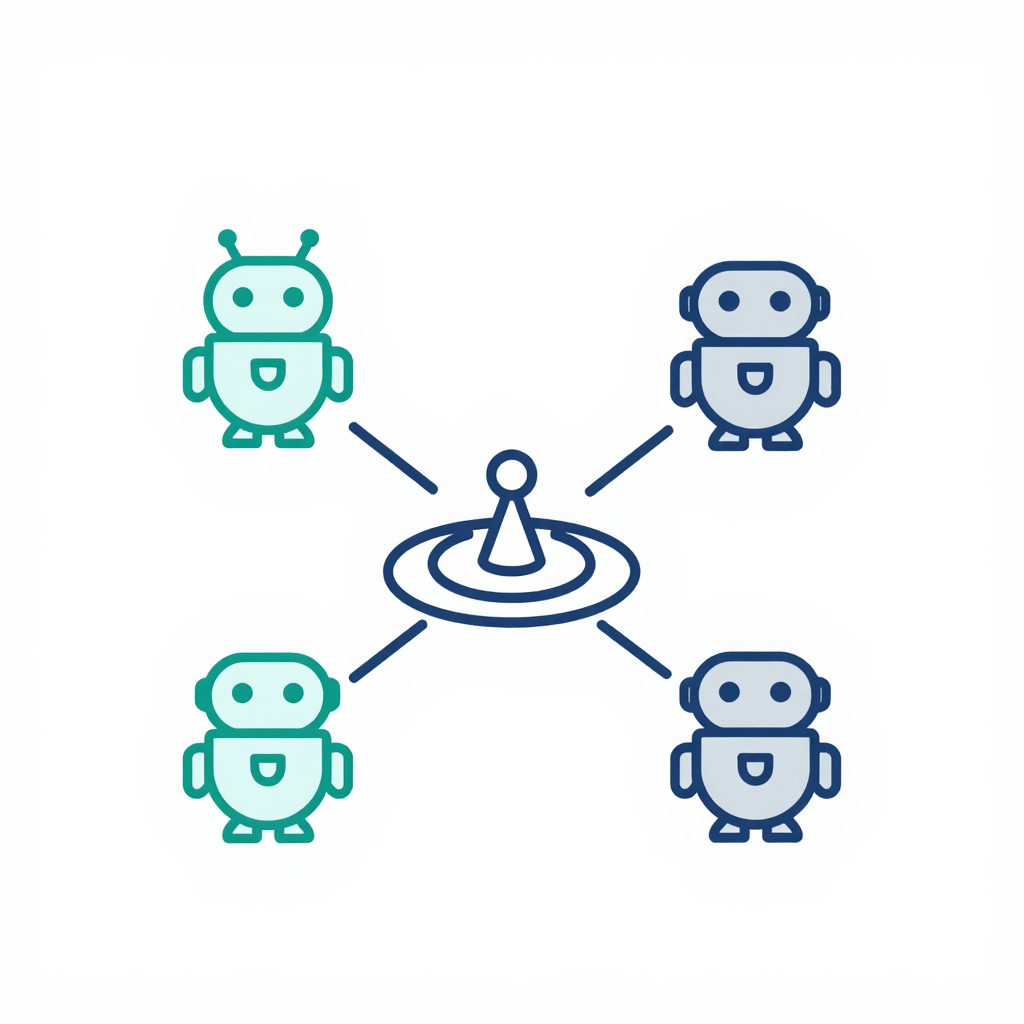
AI agent orchestration is the practice of coordinating multiple intelligent agents so they work together like a unified team. By directing each agent’s tasks, sharing context, and managing decision flow, businesses can achieve outcomes that single bots cannot reach alone.
Key components that power this orchestration include:
- Agents – specialized AI units that perform distinct functions such as data extraction, analysis, or user interaction.
- Orchestrator – the central controller that assigns roles, monitors progress, and resolves conflicts.
- Communication layer – the messaging backbone that enables real‑time data exchange and synchronization between agents.
When orchestrated correctly, AI agents reduce manual effort, accelerate decision‑making, and scale operations without sacrificing accuracy. Companies can thus unlock revenue streams and improve customer satisfaction.
Think of it as a modern orchestra: each musician (agent) masters an instrument, the conductor (orchestrator) cues the right sections, and the score (communication layer) ensures every note aligns, delivering a harmonious performance for your enterprise.
This synergy transforms technology into an asset.
| Platform | Core Features | Integration Flexibility | Typical Pricing |
|---|---|---|---|
| LangChain | Chainable prompts, memory, tool use, agent routing | Python SDK, supports OpenAI, Anthropic, Cohere, custom APIs | Free tier; paid usage based on LLM calls |
| AutoGPT | Self‑prompting autonomous loops, goal‑driven execution | Plugins for web browsing, file I/O, third‑party APIs via Python | Open‑source; optional cloud hosting fees |
| CrewAI | Task‑oriented crew management, role‑based agents, output aggregation | Extensible adapters for LangChain, LlamaIndex, custom services | Free community; enterprise plans start at $499/mo |
| SSL Labs Orchestrator | End‑to‑end workflow designer, monitoring, security compliance | Native connectors to AWS, Azure, GCP, REST APIs, on‑prem | Subscription $799/mo; custom pricing for large scale |
Key Benefits of AI Agent Orchestration
Businesses that adopt AI agent orchestration unlock powerful advantages that drive growth and efficiency.
-
Scalability – Orchestrated agents can be added or removed on demand, allowing operations to expand seamlessly across markets, data volumes, and user loads without costly re‑engineering. This elasticity reduces infrastructure spend and supports rapid onboarding of new customers.
-
Faster time‑to‑value – By coordinating specialized bots, organizations shorten development cycles, launch new services in weeks rather than months, and realize revenue gains sooner. It also accelerates feedback loops, letting teams iterate based on real‑world performance.
-
Improved decision quality – Integrated agents aggregate real‑time insights from multiple sources, surface patterns, and present recommendations, enabling leaders to make more accurate, data‑driven choices. Consequently, risk exposure drops as decisions rely on comprehensive, up‑to‑date analytics rather than intuition.
Together, these benefits make AI agent orchestration a strategic catalyst for modern enterprises. Adopting this approach future‑proofs your organization today.
CONCLUSION
In this playbook we explored how AI agent orchestration transforms isolated bots into collaborative teams that can plan, adapt, and execute complex business processes. By aligning intelligent agents with clear objectives, enterprises unlock faster decision‑making, reduce manual bottlenecks, and achieve scalable automation across functions such as customer service, supply chain, and data analytics. The case studies demonstrated measurable gains—up to 30 % higher efficiency and real‑time insights—when orchestration layers coordinate language models, vision systems, and specialized tools. Moreover, ethical safeguards built into orchestration frameworks ensure transparency, bias mitigation, and compliance with data‑privacy standards, protecting both brands and customers.
Because modern organizations must operate at the speed of data, AI agent orchestration is no longer optional; it is a strategic imperative for staying competitive. Companies that embed coordinated agents into their core workflows gain a resilient, future‑proof architecture that can evolve with emerging AI capabilities.
At SSL Labs, based in Hong Kong, we specialize in delivering end‑to‑end AI agent orchestration solutions that prioritize ethical AI and secure deployment. Our expert team designs custom orchestration pipelines, integrates leading‑edge models, and provides ongoing monitoring to ensure performance and compliance. Partner with SSL Labs to turn intelligent bots into a unified, high‑impact AI workforce that drives innovation and growth.
Frequently Asked Questions (FAQs)
Q: What is AI agent orchestration?
A: AI agent orchestration is the coordinated management of multiple intelligent agents that work together to achieve complex tasks, allowing them to share data, delegate subtasks, and adapt dynamically.
Q: How does it differ from traditional automation?
A: Traditional automation follows static scripts or rule‑based flows, while AI orchestration leverages learning models, context awareness, and real‑time decision making, resulting in more flexible and scalable solutions.
Q: Which industries benefit most from AI agent orchestration?
A: Sectors such as finance, healthcare, e‑commerce, manufacturing, and customer support gain the highest ROI because they handle large volumes of data, require rapid personalization, and need continuous optimization across workflows.
Q: Can SSL Labs help implement AI agent orchestration?
A: Yes, SSL Labs offers end‑to‑end services including strategy design, custom agent development, integration with existing systems, and ongoing monitoring to ensure reliable performance.
Q: What security considerations should be addressed?
A: Organizations must enforce data encryption, access controls, audit logging, and model‑level protections to prevent adversarial attacks, while complying with regulations such as GDPR and industry‑specific standards.