


ChatGPT 2025 Deep Dive: New Features, Flex Processing, and Bio‑Risk Safeguards
ChatGPT has entered its most transformative year yet, blending cutting‑edge AI chatbot capabilities with enterprise adoption at scale. In this guide we explore the flagship model’s latest upgrades— from the lightning‑fast GPT‑5.2 variants to flexible processing modes that promise lower latency and higher accuracy. We’ll also examine data‑driven impact metrics, such as the surge to 800 million weekly active users and a ten‑fold rise in business‑message volume. Along the way, we’ll weigh the promises against the challenges, including new safety safeguards and ongoing legal scrutiny. As Sam Altman put it, “the company has trained a new model that’s ‘really good’ at creative writing,” underscoring the creative leap these updates represent.
The article’s arc follows three pillars: first, a deep dive into fresh features like voice integration, group chat, and bio‑risk safeguards; second, an analysis of how these tools reshape user behavior, revenue streams, and enterprise adoption; third, a forward‑looking outlook on AI agents, regulatory trends, and the competitive landscape. Whether you’re a developer, product leader, or curious observer, this balanced overview equips you with the facts you need to navigate the evolving AI frontier.
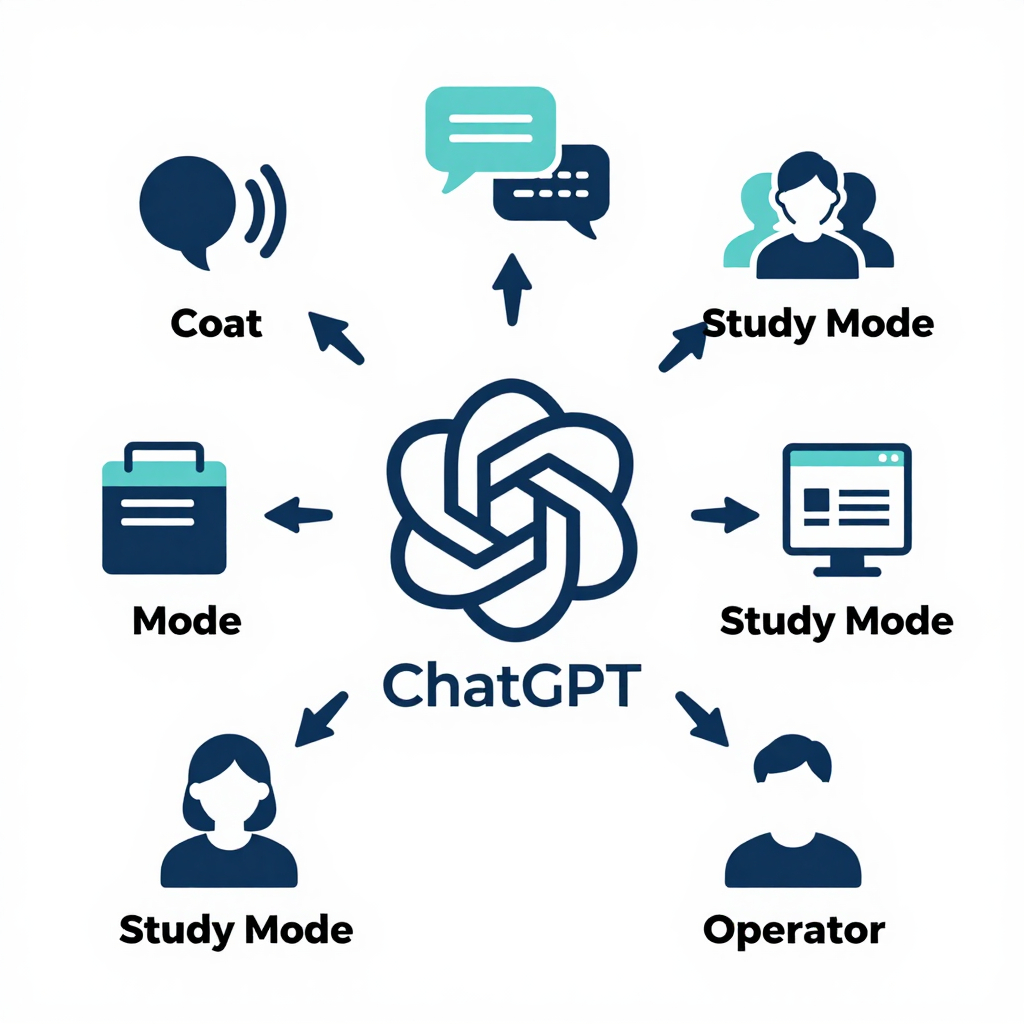
ChatGPT New Features Overview
OpenAI’s 2025 rollout brings a wave of capabilities that build on the success of GPT‑4o and Sora. The platform now serves over 800 million weekly active users and supports more than 1 million business clients worldwide.
These upgrades blend generative text, image, and audio into a single, unified experience, positioning ChatGPT as a cross‑modal AI hub.
- GPT‑5.2 variants (Instant, Thinking, Pro) – Faster reasoning and larger context windows, delivering smoother chats and deeper analysis.
- GPT Image 1.5 – An upgraded image‑generation model that produces higher‑resolution visuals and supports creative prompts, extending the legacy of Sora’s video tools.
- Voice mode – Integrated speech input and output let users converse naturally, with improved articulation and low‑latency response.
- Group chat – Multi‑user conversation rooms enable collaborative brainstorming, project planning, and real‑time tutoring.
- AI shopping – Direct product browsing and checkout inside ChatGPT, powered by partnerships with retailers such as Walmart.
- Study Mode – A focused learning environment that structures explanations, quizzes, and spaced‑repetition reminders.
- Operator – Research‑preview AI agent that can execute complex tasks across apps, acting as a personal assistant.
- Atlas – An AI‑enhanced browser for macOS that surfaces contextual information while you surf.
- o1‑pro – The most powerful reasoning model to date, extending the capabilities of the original o1 series.
- o3‑mini – A lightweight, cost‑effective version designed for high‑volume, low‑latency interactions.
OpenAI stated, “We’ve added new controls … let users adjust the chatbot’s warmth, enthusiasm, emoji use, and formatting style.”
With this toolbox, developers and enterprises can embed sophisticated AI directly into products, while everyday users enjoy richer, more natural interactions.
Below is a quick side‑by‑side comparison of the three GPT‑5.2 variants.
| Version | Model Size | Latency | Pricing Tier | Target Use‑Case | Unique Capabilities |
|---|---|---|---|---|---|
| Instant | ~1.5 B parameters | < 0.5 s per request | $0.005 / 1 K tokens | Quick answers, real‑time chat | Shallow reasoning, 8 K token limit |
| Thinking | ~3 B parameters | ~1 s per request | $0.015 / 1 K tokens | Complex problem solving, drafts | Medium‑depth reasoning, 16 K token limit |
| Pro | ~7 B parameters | ~2 s per request | $0.05 / 1 K tokens | Enterprise AI, heavy analysis | Deep reasoning, 32 K token limit, tool use |
Impact, Adoption, and Legal Landscape
OpenAI’s ChatGPT continues to reshape both consumer and enterprise markets. With 300 million weekly active users in 2025 and an 8× surge in enterprise message volume since late‑2024, the platform demonstrates broad enterprise adoption and growing reliance on AI agents for business workflows. The company’s revenue outlook—projected to triple to $12.7 billion this year—reflects the commercial traction of features such as the Operator AI agent preview and the Atlas browser for Mac.
- Consumer spending power – Global mobile spend on ChatGPT has exceeded $3 billion, outpacing rivals like TikTok and Disney+. This financial muscle fuels continued investment in new models, including GPT‑5.2 and the upcoming o1‑pro release.
- Strategic partnerships – Disney committed $1 billion for an exclusive year‑long license to use its characters in the Sora video generator, while Walmart and Apple have integrated ChatGPT into shopping and the Apple Intelligence ecosystem, respectively. These alliances expand the reach of AI‑driven experiences across entertainment, retail, and hardware.
- Safety and regulatory challenges – OpenAI handles over 1 million suicide‑related conversations weekly, prompting stricter teen safety guidelines and parental resources. Simultaneously, a Munich court ruled that ChatGPT violated German copyright law by reproducing protected song lyrics, and seven families have sued the company over alleged negligence in suicide cases. These legal pressures underscore the need for robust compliance and ethical safeguards.
- Future growth hurdles – While Mira Murati and Sam Altman steer product innovation, the rapid rollout of AI agents priced up to $20,000 per month raises concerns about accessibility for smaller firms. Additionally, copyright lawsuits from media groups and the Alden Global Capital newspaper coalition threaten to slow content‑generation capabilities.
Balancing explosive adoption with heightened regulatory scrutiny will determine whether ChatGPT sustains its momentum or encounters costly setbacks. Stakeholders will watch closely as OpenAI navigates these dynamics, shaping the future of conversational AI across industries and societal expectations.
CONCLUSION
2025 has cemented ChatGPT as the flagship AI chatbot, rolling out groundbreaking features such as GPT‑5.2’s Instant, Thinking and Pro tiers, integrated voice mode, group chat, AI‑shopping, Study Mode, and the Operator and Atlas agents.
These upgrades have driven explosive market traction: weekly active users jumped from 300 million to over 800 million, enterprise message volume grew eight‑fold, and more than one million business clients now rely on the platform, pushing projected revenue toward $12.7 billion.
At the same time, regulators and litigants have intensified scrutiny, from copyright rulings in Germany to lawsuits over teen safety and suicide‑related conversations, underscoring the growing compliance burden.
Against this backdrop, SSL Labs stands ready to help organisations navigate the AI frontier responsibly. Based in Hong Kong, SSL Labs builds ethical, transparent AI solutions across machine learning, natural language processing, computer vision, predictive analytics, and automation. Its product suite spans custom AI applications, end‑to‑end ML pipelines, advanced NLP and vision tools, and AI‑driven analytics, all engineered with bias‑free, privacy‑first principles.
Explore how SSL Labs can accelerate your AI initiatives while safeguarding trust—visit our website or reach out today. Our team of seasoned AI engineers and data scientists is eager to tailor solutions that fit your unique challenges, ensuring measurable impact and long‑term value.
Frequently Asked Questions (FAQs)
Q1: What are the differences between GPT‑5.2 Instant, Thinking, and Pro?
A: Instant gives quick, short replies; Thinking adds deeper reasoning for complex tasks; Pro provides the longest context, higher token limits, and priority access for power users.
Q2: How does the new voice mode work?
A: Voice mode streams live speech‑to‑text and text‑to‑speech inside ChatGPT, using on‑device processing for low latency and multilingual support.
Q3: Is ChatGPT safe for teens?
A: OpenAI added stricter safety filters, teen‑mode limits, and parental controls, plus monitoring for suicide‑related chats to keep teen users safe.
Q4: How does the recent Disney partnership affect content generation?
A: The Disney deal lets Sora generate videos with Disney characters and enriches ChatGPT prompts with licensed imagery, while keeping text policies separate.
Q5: What legal challenges is ChatGPT facing?
A: OpenAI faces copyright lawsuits and a German court ruling on lyric infringement, plus claims of negligence over suicide‑related outcomes, prompting tighter safeguards.