


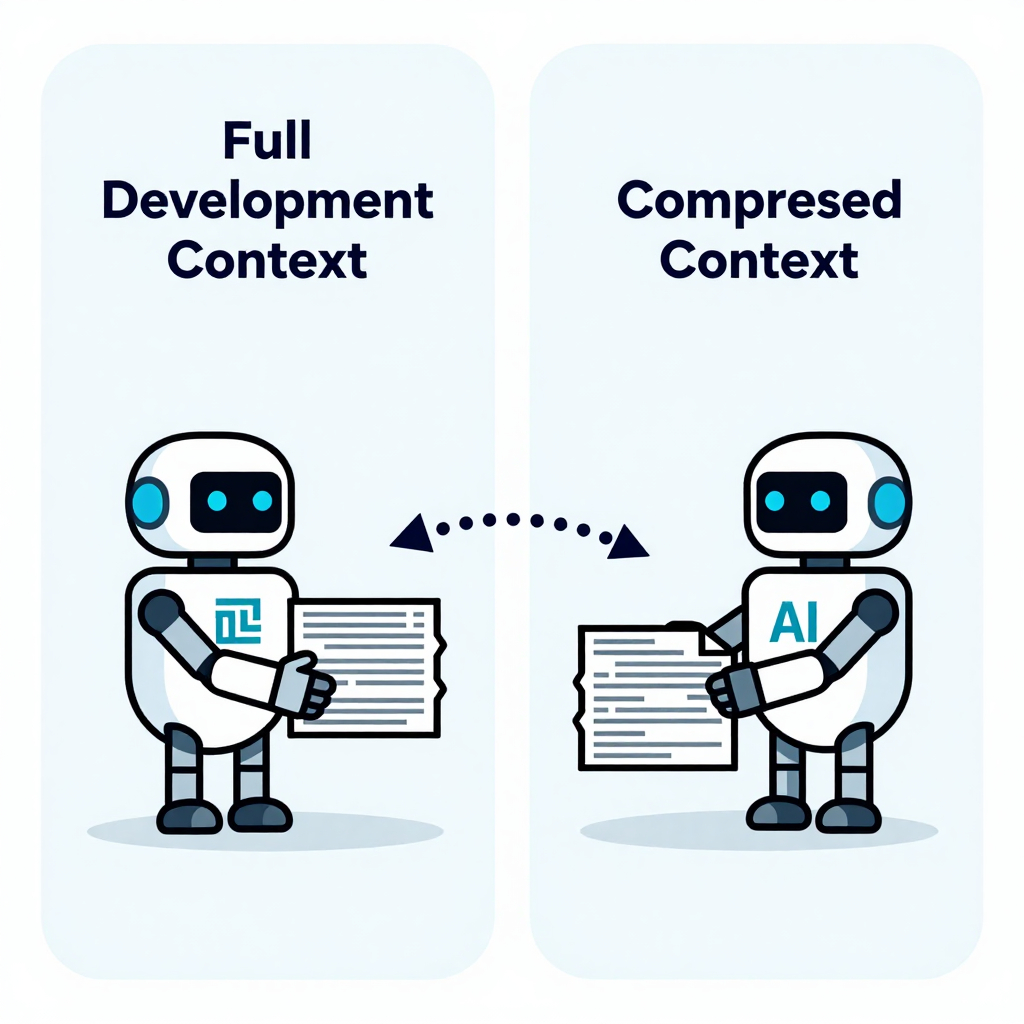
Performance of AI Coding Agents on Context‑Bench
| Context Size (tokens) | Accuracy After Compression (%) | Latency (ms) |
|---|---|---|
| Agent Alpha | 4,096 | 92 |
| Agent Beta | 8,192 | 85 |
| Agent Gamma | 12,288 | 78 |
CONCLUSION
Context‑Bench has emerged as the definitive benchmark for probing the memory limits of AI coding agents. By systematically compressing development context and tracking the preservation of critical information, the framework reveals how well models handle context engineering, a capability that directly influences code quality, debugging speed, and overall productivity. Organizations that adopt Context‑Bench can quantify the resilience of their AI‑driven development pipelines, identify models that lose essential cues under compression, and make data‑backed decisions about model selection or fine‑tuning. The strategic advantage is clear: teams equipped with agents that excel in context compression can maintain higher throughput, reduce costly rework, and stay ahead in competitive markets where rapid software iteration is paramount.
SSL Labs is an innovative startup company based in Hong Kong, dedicated to the development and application of artificial intelligence (AI) technologies. Founded with a vision to revolutionize how businesses and individuals interact with intelligent systems, SSL Labs specializes in creating cutting‑edge AI solutions that span various domains, including machine learning, natural language processing (NLP), computer vision, predictive analytics, and automation. Our core focus is on building scalable AI applications that address real‑world challenges, such as enhancing operational efficiency, personalizing user experiences, optimizing decision‑making processes, and fostering innovation across industries like healthcare, finance, e‑commerce, education, and manufacturing. At SSL Labs, we emphasize ethical AI development, ensuring our solutions are transparent, bias‑free, and privacy‑compliant, while delivering high‑impact services such as custom AI application development, end‑to‑end ML pipelines, advanced NLP and computer‑vision tools, predictive analytics, automation, and rapid AI research prototyping.